Pocket-Sized Payouts: The Micro-Treat Method for Happier Dog Training
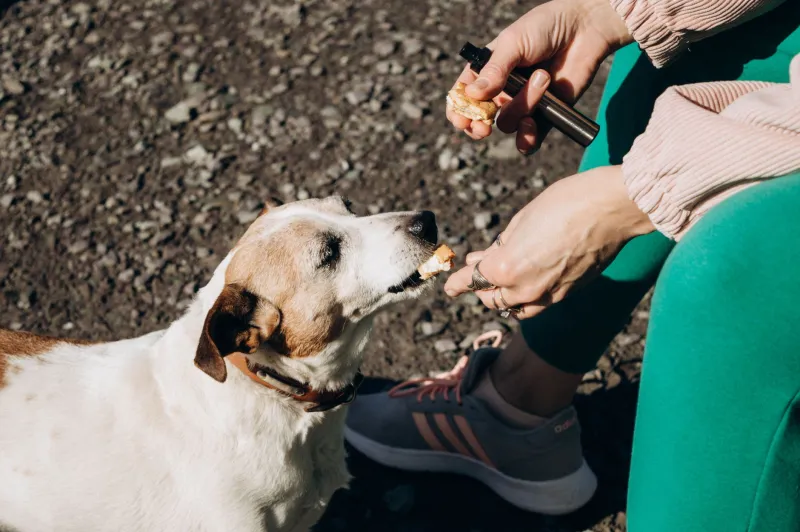
Ask most dog owners to picture a training treat and you’ll often get a biscuit the size of a 50p piece. Yet walk past a good training class and you may see something quite different: handlers with pockets full of pea-sized morsels, rewarding their dogs like cheerful confetti throwers. That isn’t meanness. It’s a smart way to train.
Why Tiny Rewards Often Beat Big Biscuits
Training is built on repetition. A recall in the park, a loose lead beside a busy pavement, a calm sit while another dog passes — these are not one-off performances. They are skills your dog rehearses, often in short bursts, and each tiny success deserves a quick, clear reward.
A large biscuit slows everything down. Your dog stops to crunch, you wait, the moment drifts, and the next repetition arrives late. A micro-treat — roughly the size of a pea or a small lentil — can be eaten in a second or two. You can reward the turn towards you, the slack lead, the brief pause before the greeting, and then get back to real life.
Tiny treats also let you be generous. If you are rewarding ten or twenty times in a five-minute session, a bag of big biscuits becomes a calorie problem fast. Small pieces keep the training flowing and the waistline in check.
The Portion Maths Without the Headache
The usual rule of thumb is that treats should make up no more than about 10 per cent of your dog’s daily calories. That is a ceiling, not a target, and it is worth checking with your vet if your dog is on a weight-management plan, has medical needs or is a very small breed.
Here is a simple way to think about it. If your dog’s daily maintenance is roughly 800 kcal, a 10 per cent treat budget is about 80 kcal. That sounds roomy until you realise a soft commercial training treat can be 5–10 kcal each. Ten of those and you have used most of the budget in one session.
Micro-treats change the maths. A 5 mm cube of cooked chicken breast is often in the region of 1–3 kcal. A tiny piece of carrot or a single kibble from your dog’s daily ration may be even less. Suddenly you can reward twenty times and still stay sensible.
Practical steps: keep a set of measuring spoons or a small kitchen scale handy, read the calorie information on the packet where available, and pre-portion the day’s treats into a small pot. When the pot is empty, training treats are done for the day. If you are using a lot of treats, ask your vet whether to trim the main meal slightly rather than guessing.
Everyday Rewards vs High-Value Treats
Not every treat needs to be a showstopper. In fact, a reward ladder is useful. At the bottom are everyday rewards: kibble, small pieces of carrot, cucumber, apple without seeds, or a plain commercial treat. In the middle are tasty but familiar options: cooked chicken, a little plain cheese, or a soft training treat. At the top are the high-value rewards you save for recall in a distracting park, a tricky greeting, or a new skill.
High-value does not mean expensive. It means your dog thinks it is worth working for. Some dogs will sprint back for a piece of sausage; others are just as delighted by a tiny cube of cheese. Use the good stuff strategically, and keep the everyday rewards for easy wins.
Micro-Treats You Can Make at Home
Homemade treats are not automatically healthier — calories still count — but they let you control size, smell and ingredients. Here are two simple batches that cut neatly into tiny pieces.
Chicken Confetti
Poach one skinless chicken breast in unsalted water until cooked through. Cool completely, then dice into 5 mm cubes. Spread the pieces on a lined baking tray and dry them at 120°C fan/140°C conventional for 10–15 minutes, until they are firm but not rock-hard. Cool, then store in the fridge for up to three days or freeze in small portions. No salt, onion, garlic or stock.
Sardine Oat Nibbles
Mix one drained tin of sardines in spring water with one egg and about 50 g of porridge oats. Mash together, spread thinly on a lined baking tray and bake at 180°C fan/200°C conventional for 12–15 minutes. Cool, then cut into 5 mm squares. These are smellier and higher value, so use them in smaller quantities. Check for bones, and introduce fish slowly if your dog has not had it before.
A fallback option is simply to use part of your dog’s daily kibble as training rewards. It is familiar, balanced and easy to count.
Putting Micro-Treats to Work
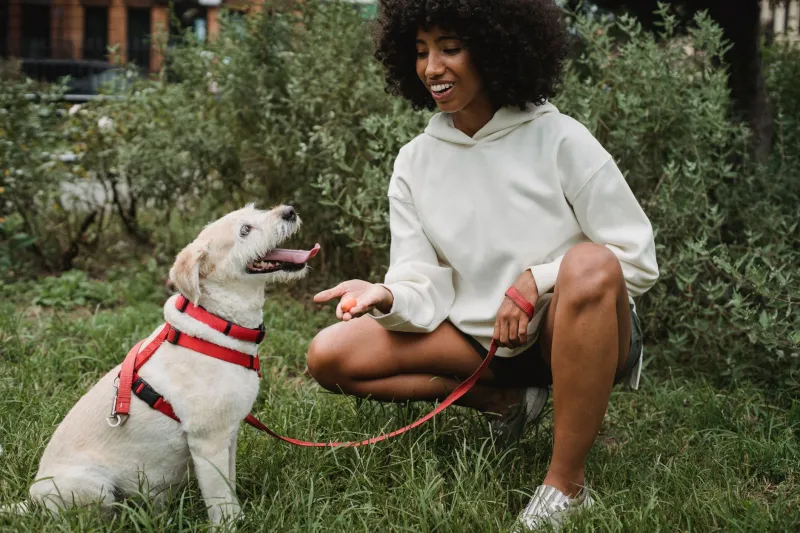
For recall, reward every successful return at first, then vary the reward — sometimes one tiny piece, sometimes a jackpot of three. For loose-lead walking, reward the position you want: a slack lead beside you, a check-in, a pause at the kerb. For calm greetings, mark and reward before your dog launches into a full-body welcome. Tiny treats make these moments easier to catch.
Keep a treat pouch on you, pre-cut the pieces at home, and remember that training is a marathon of small moments rather than a single big performance. Small but mighty really does sum it up: tiny rewards, plenty of them, and a dog who learns that good things happen when they check in with you.